End of Tenancy Cleaning: What Affects Your Deposit
Cleaning causes more deposit disputes than anything else. What adjudicators compare, what the law says about professional cleaning, and where deposits go.
Published by Jerimiah, owner of J&BROS Cleaning Last updated 16 August 2026 5 min read
In short
Cleaning is the single most common cause of tenancy deposit disputes in the UK, involved in 54% of TDS cases in 2024-25. Adjudicators do not judge a property against a showroom standard. They compare the check-in report against the check-out report, so the question is whether the flat is as clean as it was on the day you moved in.
Cleaning is the thing most likely to cost you money at the end of a tenancy. Not damage, not missing keys, not unpaid rent. In the Tenancy Deposit Scheme’s 2024-25 dispute figures, cleaning featured in more than half of the cases, which puts it ahead of every other cause of disagreement between tenants and landlords in the country.
That statistic is worth sitting with, because it tells you where to put your effort in the last week of a tenancy.
The comparison that actually happens
Two documents, not a show flat
There is a common belief that a property has to be handed back looking like a show flat. That is not the test. When a deposit dispute reaches an adjudicator, they compare two documents: the check-in report from the day you moved in, and the check-out report from the day you left.
The question is not “is this clean?” It is “is this as clean as it was?”
Why the check-in report is the one that counts
This cuts both ways. If your flat in Poplar was handed over with a greasy oven and the check-in report says so, you are not on the hook for returning a better oven than you received. If it was handed over spotless after a professional clean, that is the level you need to match.
Which is why the check-in report matters far more than most tenants realise on the day they sign it. It is the only baseline you get.
The professional cleaning clause
Plenty of tenancy agreements still carry a line requiring a professional clean with a receipt to prove it. In England the payment half of that is not binding.
The standard, not the method
The distinction is between the standard and the method. A landlord can still ask for the property back at a professional standard, and Shelter’s view is that such a clause is only fair if the flat was cleaned to that standard before you moved in. What a landlord cannot do is tell you who has to do the work, or make you produce an invoice.
In practice most people in a Canary Wharf or Stratford flat still book an end of tenancy cleaning service, because a full clean on a two bedroom place is a long day of work and the oven alone can take two hours. That is a practical decision about time, not a legal obligation.
A receipt is not a shield
A cleaning claim is built on the tenancy agreement and the signed check-in and check-out reports. Invoices and dated photographs sit underneath those as supporting evidence, which is why paying for a bad clean leaves you with an expense and the deduction anyway.
Where the money actually goes
The detail, not the mess
Deductions rarely come from obvious mess. Tenants tend to hoover, wipe the surfaces, and take the bins out, and anything too big for a bin bag, a mattress or a broken desk, leaves as bulky waste under a householder’s duty of care. The deductions come from the detail:
- Oven interiors, including the glass door panels and the racks
- Extractor filters, which are often never cleaned across a whole tenancy
- Limescale on shower glass, taps, and shower heads
- Window tracks and frames, especially the runners on sliding doors
- Seals around baths, basins, and shower trays
- Behind and under white goods that are easy to pull out
None of this is dramatic. It is simply the work that a weekly tidy never includes, accumulating across a year or two, and it is what a room by room end of tenancy cleaning checklist exists to catch.
Why limescale is its own problem in London
The water here is hard, so scale forms fast on glass and chrome in every flat from Shadwell to the Isle of Dogs. Normal build up across a tenancy is generally treated as fair wear and tear. Scale that has been left long enough to etch the glass is a different conversation, and it is one of the more common reasons a bathroom fails a check-out inspection.
Protecting yourself, in order of usefulness
- Photograph everything at check-in, dated, including the inside of the oven and the state of the seals. Ten minutes on day one is worth more than any argument later.
- Read the check-in report properly and challenge anything that describes the flat as cleaner than you found it.
- Photograph everything again at check-out, from the same angles.
- Keep the inventory somewhere you will still have it two years later.
- Deal with limescale and the oven early, rather than on the final morning.
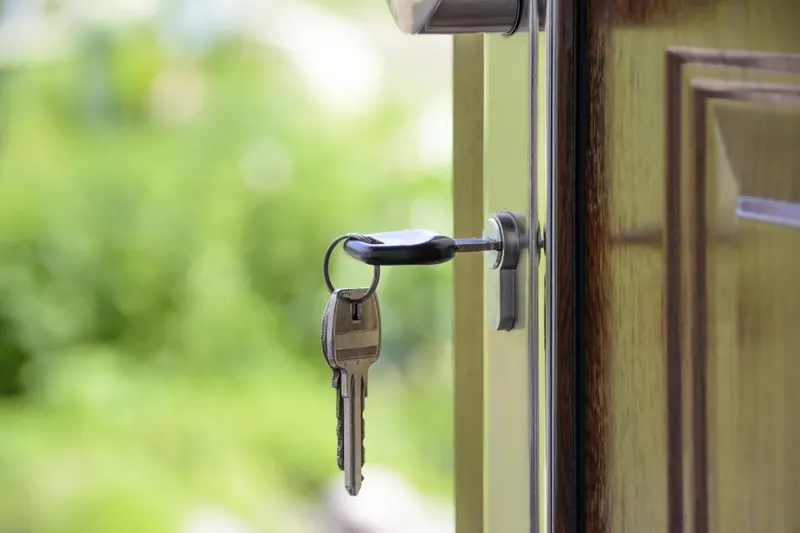
Photograph every room again before the keys go back.
WDnet Studio · CC0If a deduction is proposed
If a deduction is proposed and you disagree, you can raise a dispute through the scheme protecting your deposit. It is free. The adjudicator will ask both sides for evidence and decide based on what is documented, which is exactly why the photographs matter more than the argument.
What we would say honestly
Most tenancies end without an argument.
About 1%
Disputes are rare
Only about 1% of protected deposits reach formal adjudication, so a formal fight really is rare. A quiet partial deduction is not.
The reason cleaning dominates the disputes that do happen is not that landlords are unreasonable, it is that “clean” is the one term in a tenancy agreement that two people can read completely differently.
Photographs turn an opinion into a record. That is the whole trick.
The numbers, and where they come from
- Top dispute cause
- Cleaning was involved in 54% of Tenancy Deposit Scheme disputes in 2024-25, making it the single biggest source of deposit disagreement.
- Source
- Disputes are rare
- In the 12 months to March 2025, only about 1% of all protected deposits (46,950 cases) went to formal adjudication.
- Source
- Professional cleaning
- Under the Tenant Fees Act 2019, landlords and agents in England cannot require a tenant to pay for professional cleaning as a condition of the tenancy. Tenants may do the work themselves.
- Source
- The standard applied
- TDS adjudicators compare how clean the property was at check-in with evidence of its condition at check-out, rather than against a fixed ideal.
- Source
- What actually comes back
- Government analysis of Deposit Protection Service data found that on average tenants receive 77% of their deposit back, and that 51% of tenants have their deposit returned in full.
- Source
Common advice that is wrong
- false
“My tenancy agreement says professional clean, so I have to hire a company.”
In England, a clause forcing you to hire a cleaning company is not binding. What you owe is the standard the check-in report records. You can meet it yourself.
A term requiring you to pay a third party for cleaning is not binding on you in England, because cleaning is not a permitted payment under the Tenant Fees Act 2019. A landlord may ask for the property back at a professional standard, though Shelter's position is that such a clause is only fair if the flat was cleaned to that standard before you moved in. Either way the obligation is about the result, not about who does it. Hiring a company is one route, often the easiest, but it is a choice.
Source: england.shelter.org.uk
- false
“If I pay for a professional clean, my deposit is guaranteed.”
A cleaning claim is decided on the signed check-in and check-out reports, so a receipt proves what you spent rather than what the flat looked like.
The three deposit schemes' joint guidance lists the tenancy agreement and the signed check-in and check-out reports as the evidence a cleaning claim must be built on. Invoices, receipts and dated photographs only support it. The onus sits with the landlord too: the deposit stays your money until they prove a loss. So an invoice for a clean that was done badly, or for work the flat never needed, will not stop a deduction by itself.
- partly true
“Landlords usually keep part of the deposit.”
Government analysis of DPS data put full returns at 51% and the average return at 77% of the deposit. Deductions are common; formal disputes are rare.
Deductions are more common than tenants are usually told. Analysis of Deposit Protection Service data in the government's 2019 deposit reform paper found that 51% of tenants get the whole deposit back, and that on average tenants get 77% of it back, so something is withheld in roughly half of tenancies. What is genuinely rare is a fight about it: about 1% of protected deposits reach formal adjudication. The money stays yours until the landlord proves a loss.
Source: assets.publishing.service.gov.uk
What we see on the job
The most useful thing we can tell a tenant is that we cannot create your evidence for you. We will do the work, and we work the same end of tenancy list every time rather than judging a flat by eye, but the photographs and the check-in report are yours, and they carry far more weight with an adjudicator than any invoice of ours. There are six of us and you get the same faces, so if your agent comes back with a list, send it over and we return and sort it rather than argue about it.
Common questions
Do I legally have to pay for a professional clean?
No. In England the Tenant Fees Act 2019 stops a landlord or agent requiring you to pay a third party for cleaning. You must return the property as clean as it was at check-in, but you are allowed to do that work yourself.
What standard will the property be judged against?
The check-in report. Adjudicators compare the documented condition at the start of the tenancy with the evidence at the end. If the flat was handed to you with a dirty oven, you are not expected to hand back a spotless one.
What is the most common reason cleaning money is deducted?
Detail work rather than obvious mess: oven interiors, extractor filters, limescale on glass and taps, window tracks, and the seals around baths and shower trays. These are the places a quick tidy misses and an inspector checks first.
How much evidence should I keep?
Dated photographs of every room at check-in and again at check-out, plus the signed inventory. Photographs from both ends of the tenancy are the evidence adjudicators find most useful, because they show change rather than opinion.
Does hard water make limescale my fault?
London water is hard, so scale builds up quickly on glass and chrome. Normal accumulation over a tenancy is usually treated as fair wear. Scale that has been left to etch and stain is a cleaning issue, which is why it is worth dealing with before the final inspection.
If you would rather we did it
We are a small cleaning team working across Canary Wharf and East London.
End-of-Tenancy Cleaning
Agent-ready finish so you get your deposit back.
From £100
Deep Cleaning
Oven, behind furniture, limescale, skirting boards.
From £60
Who is behind this
J&BROS Cleaning is run by Jerimiah, who owns the business. We are a small cleaning team working across Canary Wharf and East London, and these guides are published under his name. More about us .
Cleaning in East London
Same-day quote · fixed price